About Key Scales Ford – Your Trusted Ford Dealer in Leesburg, FL
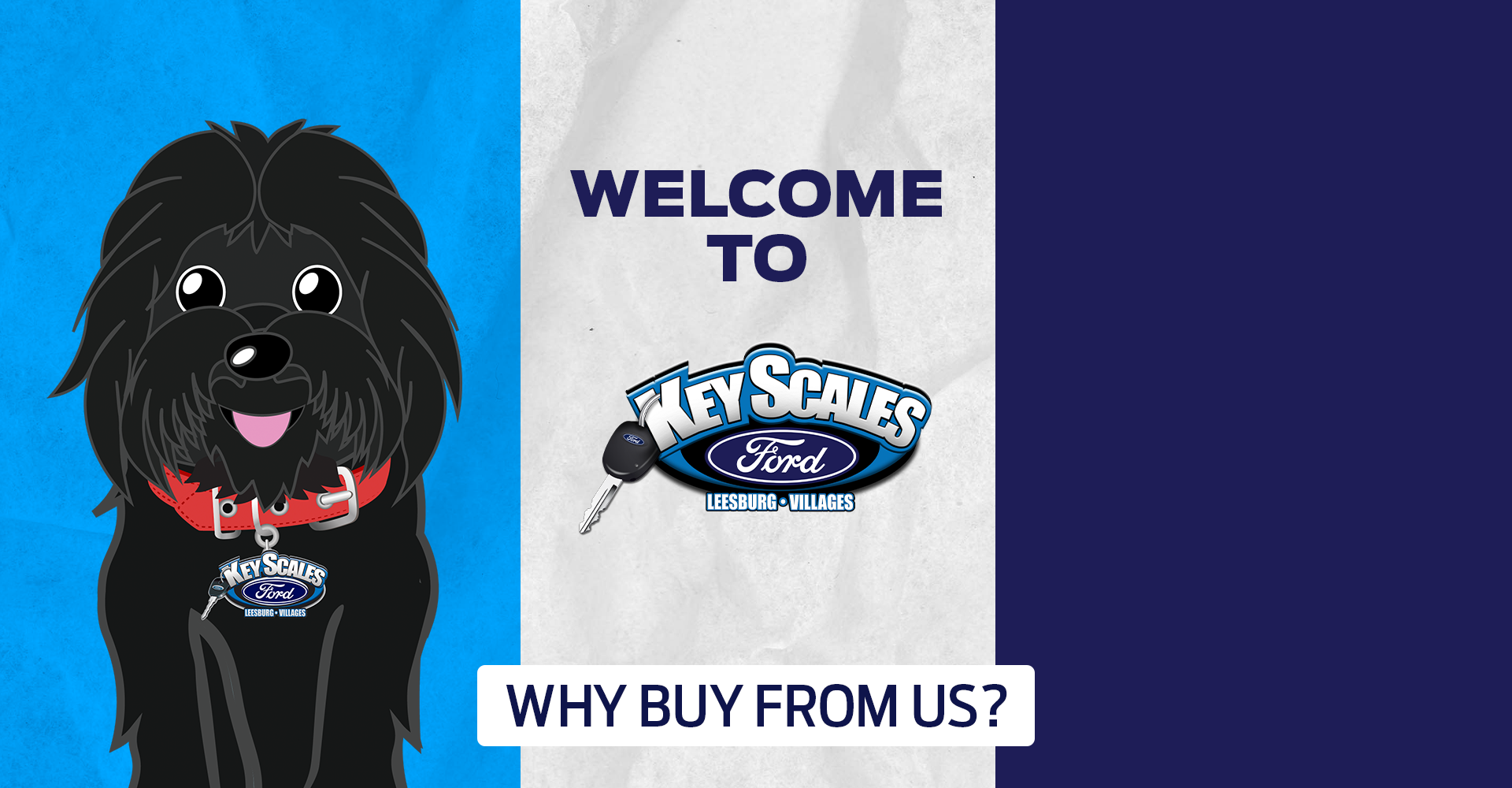
Welcome To Key Scales Ford, Proudly Serving Leesburg, Orlando, St. Petersburg, Tampa, and All Surrounding Regions!
At Key Scales Ford in Leesburg, FL, we strive to provide excellent deals, honesty, integrity, a no-pressure sales environment, an easy 24/7 online buying experience, and a hassle-free car-buying experience. If you are Spanish-speaking, we have bilingual staff members who will assist you every step of the way! Our dealership has been family-owned for over 50 years, since 1972, meaning the needs of you and your family always come first. This is exactly what dealership principal, Harriet Scales, intends for everyone who walks through our doors. Whether you’re visiting the sales, finance, or service departments, you will receive nothing but the best customer service from each member of our staff, including hospitality from our Chief Barketing Officer and mascot dog, Shelby! Affectionately named after the Shelby Mustang, this proud hound epitomizes a pet-friendly, “paw-some”, and caring environment that all guests will surely enjoy. Come meet Shelby and our wholesome staff as you browse our extensive selection of vehicles at Key Scales Ford today!
Find Your Dream Vehicle
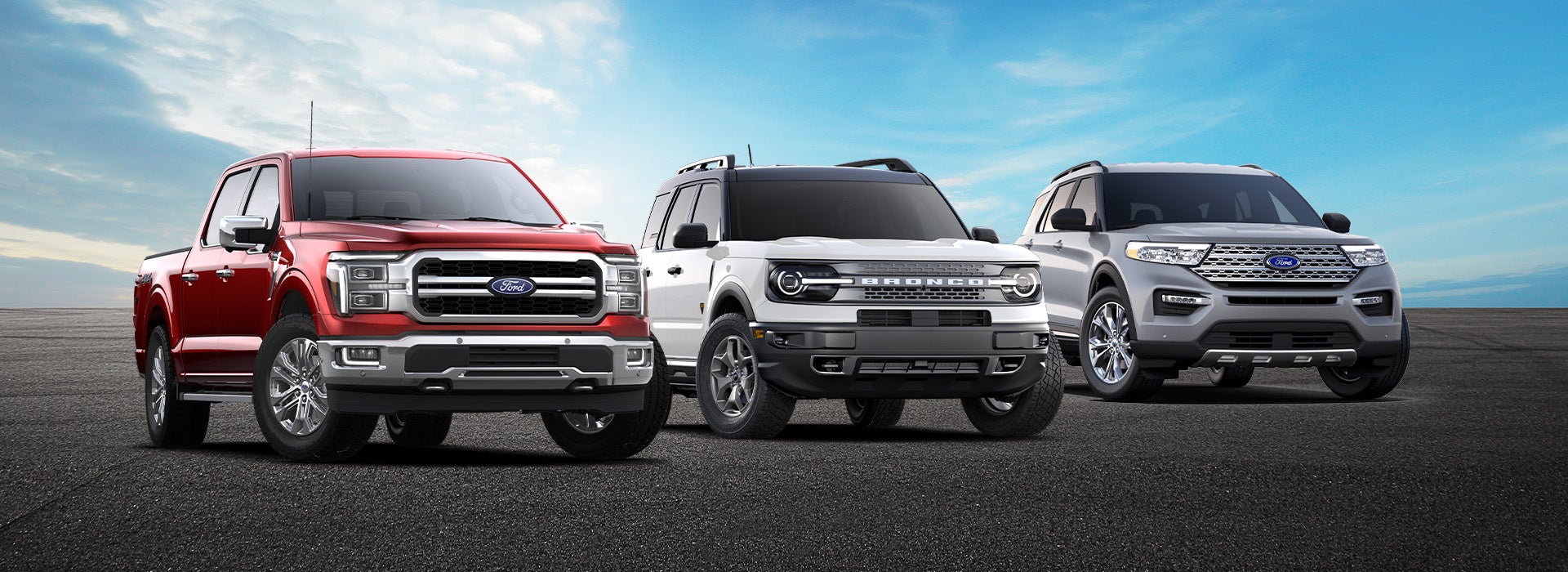
When shopping for a new vehicle, we know that finding the perfect fit can sometimes be difficult. At Key Scales Ford, we can assure you that our talented team will ensure that you find the car, truck, or SUV that checks all of your boxes. Our showroom is stocked with premier Ford vehicles that are of the highest quality and safety ratings. If you’re looking for a compact SUV with off-road capabilities, the Ford Bronco Sport will be a great match. For something a bit larger and more family-friendly, the Ford Expedition can fit everyone comfortably with room to spare. For a truck that won’t back down from any project, you can never go wrong with the iconic Ford F-150. Keep an eye out for Shelby’s Specials for a number of rides you’ll love. If you’re looking for a vehicle that will work with your budget, we have a multitude of pre-owned vehicles as well. These vehicles come with a comprehensive CARFAX™ Vehicle History Report to ensure your vehicle is safe and up to date on service. As a congrats to college grads or a thank you to those serving in our armed forces, we have savings tailored for you.* If you choose to purchase a certified pre-owned Ford, you’ll reap the benefits of the Ford Blue Advantage, which provides you with a thoroughly inspected vehicle with benefits like 24/7 roadside assistance, FordPass™ Rewards Points,** and comprehensive limited warranties.
We’re Here Every Step Of The Way
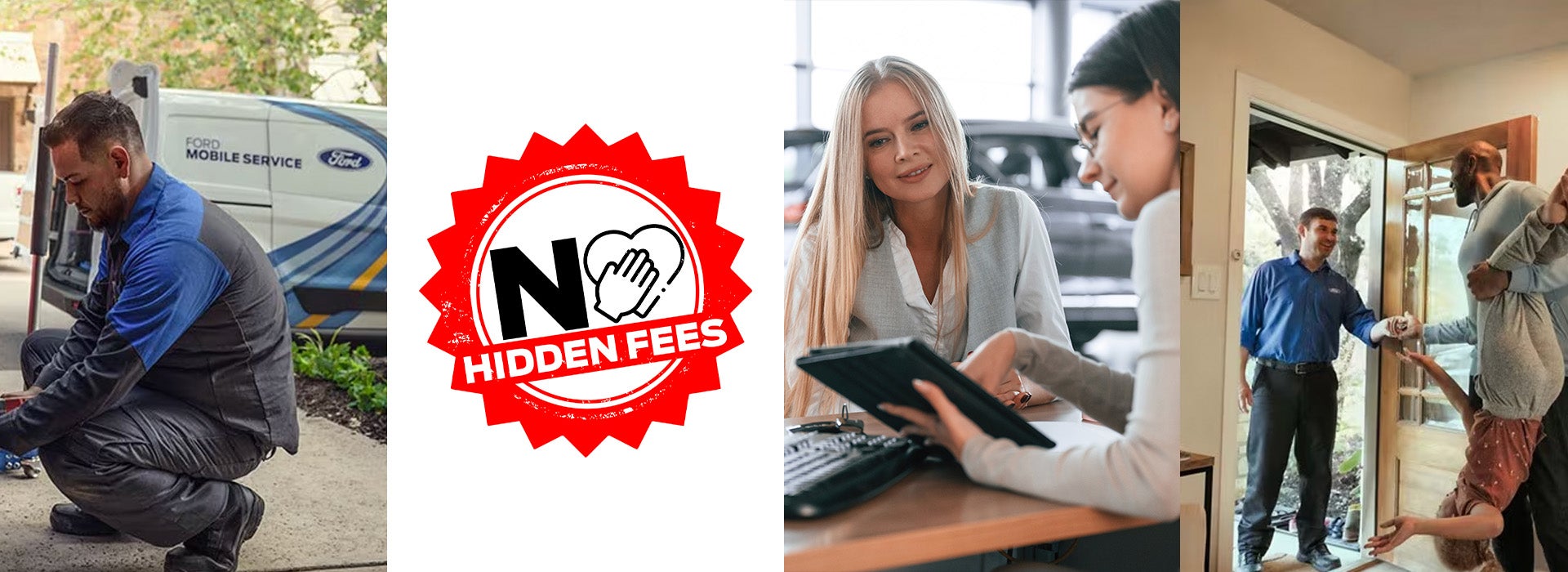
The dedicated team members in our finance department are experts in finding the perfect payment plan for you. We also have many helpful tools, such as an Online Credit Application, Payment Calculator, and competitive Kelley Blue Book® trade-in value for your old vehicle. When it’s time for routine maintenance or service on your vehicle, the talented technicians in our service department will be ready to get your vehicle back on the road running smoothly. Our Preferred Body Shop & Collision Center also provides top-notch auto body care to damaged vehicles while using authentic OEM parts to keep your ride running like new. You can opt for Ford Pickup and Delivery, where we’ll pick up your vehicle for service at our dealership and bring it back to you. Our Mobile Service also gives you convenient service wherever you are. Our dealership is pleased to provide the Ford "White Glove Treatment," which is a premium service designed to offer an enhanced and personalized customer experience for Ford owners. It aims to elevate the traditional car buying and ownership process by providing exceptional convenience, tailored services, and meticulous attention to detail. Our Ford Protection program covers your vehicle in a variety of ways, including service, repairs, and tires.

Here For You And Our Community
At Key Scales Ford, we are more than just a dealership, we are a community. That is why we are honored to support the Brett Boyer Foundation, whose mission is to raise awareness and support for Congenital Heart Disease (CHD), and also promote understanding of Down Syndrome. We also support organizations like the American Cancer Society, Villages for Veterans, and the Lake County School District. The immeasurable joy of giving back is priceless. Whether it’s donating school supplies or a car to a graduating senior, we thoroughly enjoy supporting our community. To learn more about how to contribute to our various causes, speak to one of our team members.
Let’s Get Started
When you’re ready to begin the journey to finding your next vehicle, our team at Key Scales Ford will be here to help you! Schedule a test drive with us today.
| Monday | 8:30AM - 7:00PM |
| Tuesday | 8:30AM - 7:00PM |
| Wednesday | 8:30AM - 7:00PM |
| Thursday | 8:30AM - 7:00PM |
| Friday | 8:30AM - 7:00PM |
| Saturday | 8:30AM - 6:00PM |
| Sunday | Closed |
| Monday | 7:30AM - 5:00PM |
| Tuesday | 7:30AM - 5:00PM |
| Wednesday | 7:30AM - 5:00PM |
| Thursday | 7:30AM - 5:00PM |
| Friday | 7:30AM - 5:00PM |
| Saturday | 8:00AM - 1:00PM |
| Sunday | Closed |
| Monday | 7:30AM - 5:00PM |
| Tuesday | 7:30AM - 5:00PM |
| Wednesday | 7:30AM - 5:00PM |
| Thursday | 7:30AM - 5:00PM |
| Friday | 7:30AM - 5:00PM |
| Saturday | 8:00AM - 1:00PM |
| Sunday | Closed |
*Contact dealer for complete details.
**Buyers of Ford Blue Advantage vehicles will receive 22,000 Points (Gold Certified) or 11,000 Points (Blue Certified) after enrollment within 60 days of vehicle sale. Modem not required. Visit a participating dealer for details.